
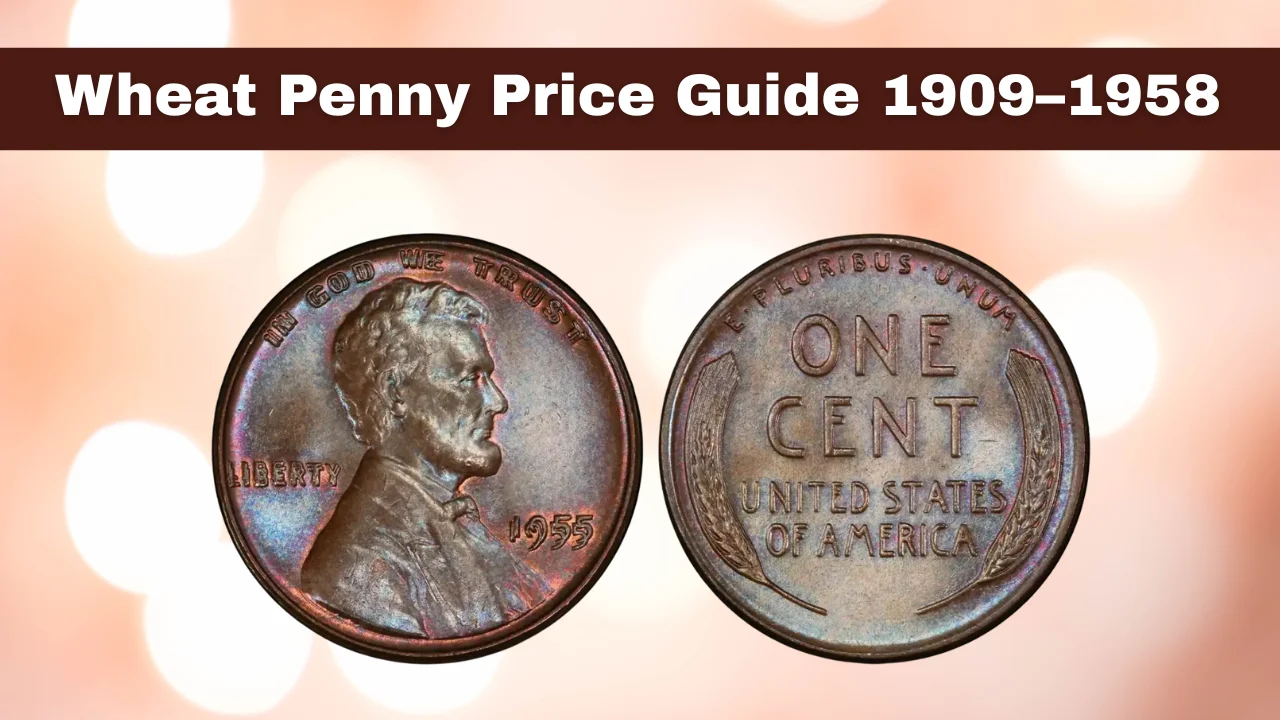
Wheat Penny Price Guide: If you have ever found an old penny at the bottom of a drawer or inside a coin jar and wondered if it is worth more than one cent, you are not alone. The Wheat Penny Price Guide 1909–1958 is one of the most searched tools for coin collectors, hobbyists, and even casual coin owners hoping they have struck copper gold. Wheat pennies are small pieces of American history, minted between 1909 and 1958, with unique designs, limited mintages, and the potential to be surprisingly valuable.
The Wheat Penny Price Guide 1909–1958 helps collectors identify the most sought-after coins from this era. From coins with rare mintmarks to those with striking errors, these pennies can hold serious value. Whether you are new to coin collecting or refining your investment, this guide gives a full breakdown of the most important years, what to look for, and how market trends are shaping the value of these classic coins today.
Wheat Penny Price Guide 1909–1958
The Wheat Penny Price Guide 1909–1958 is essential for anyone looking to assess the true value of their Lincoln wheat cents. These pennies were minted at different locations across the United States, including Philadelphia, Denver, and San Francisco. Each mint produced coins in different quantities, which directly affects their rarity and demand. Some pennies, like the 1909-S VDB or the 1955 Doubled Die, are considered rare treasures, often selling for hundreds or even thousands of dollars.
Understanding key details like mint year, mintmark, and coin condition can dramatically shift how much a coin is worth. Collectors and investors alike rely on up-to-date market trends and pricing charts to evaluate potential purchases or sales. If you want to avoid overpaying or underselling, learning how to use this price guide effectively can make a big difference in your coin collecting journey.
Wheat Penny Value Overview Table (1909–1958)
| Year & Variant | Estimated Collector Value Range |
| 1909-S VDB | $600 to $3,000+ |
| 1914-D | $150 to $2,500+ |
| 1922 No D (Plain) | $400 to $3,000+ |
| 1931-S | $100 to $600+ |
| 1955 Doubled Die | $800 to $2,500+ |
| 1943 Steel Penny | $0.20 to $10 |
| 1944 Steel Penny | $30,000+ (Extremely Rare) |
| 1926-S | $7 to $200+ |
| 1910-S | $5 to $200+ |
| 1958 (Last Year Issue) | $0.10 to $10 |
Values vary based on grading and market demand.
History and Significance of Wheat Pennies
Wheat pennies were introduced in 1909 to honor Abraham Lincoln’s 100th birthday and were the first U.S. coins to feature a real person. The coin’s reverse side shows two wheat stalks, symbolizing prosperity and agricultural heritage. Designed by Victor David Brenner, this coin became instantly iconic.
Many early wheat pennies were widely circulated, but some were minted in very low numbers. These limited mintage coins have become the most collectible today. Pennies like the 1909-S VDB had such a low production that they immediately caught the attention of collectors and are still in demand over a century later.
Key Dates and Mintmarks
Knowing which wheat pennies are rare starts with identifying the year and mintmark. Coins from Philadelphia carry no mintmark, while Denver uses a “D” and San Francisco uses an “S”. Some key dates and mintmarks that collectors should always watch for include:
- 1909-S VDB: Famous for its designer initials and extremely low mintage
- 1914-D: Another low mintage coin, highly collectible
- 1922 Plain: A Denver mint coin where the “D” was accidentally omitted
- 1931-S: Minted during the Great Depression, making it historically significant
- 1955 Doubled Die: Known for a strong doubling error on the front
These coins often appear in price guides and are considered some of the most valuable finds in coin collecting.
Condition and Grading
A coin’s condition can be the difference between a penny worth one dollar or one thousand. Grading is based on a scale from Poor (P-1) to Mint State (MS-70). For wheat pennies, collectors focus on details like Lincoln’s facial features, sharpness in the wheat design, and general wear.
Professional grading from organizations like PCGS or NGC adds credibility and can greatly increase resale value. Even common wheat pennies in excellent condition can be worth much more than average circulated ones. Always handle coins carefully and avoid cleaning them, as it can damage their surfaces and reduce value.
Market Trends and Investment Potential
In recent years, the demand for collectible coins has surged, and wheat pennies are among the most traded in the numismatic market. Rare pennies continue to break records at auctions, especially when professionally graded and well-preserved. As more people enter the hobby, the value of rare coins, particularly those with key mintmarks or errors, has steadily increased.
The Wheat Penny Price Guide 1909–1958 remains one of the most reliable resources for collectors looking to track market movement. Investment-wise, collectors should focus on key dates and higher-grade coins that hold long-term value. The 2025 market trends suggest continued interest in vintage U.S. coinage, especially among younger collectors and investors looking for tangible assets.
Common Mistakes to Avoid
Coin collecting is fun, but small mistakes can cost a lot. One major error is assuming all old pennies are valuable. In truth, only specific years and conditions are worth real money. Another mistake is cleaning coins. While it may seem like a good idea, it actually lowers the coin’s value by damaging its natural surface.
Collectors also forget to check mintmarks or overlook important varieties like doubled dies. Buying ungraded or altered coins from unreliable sellers can lead to scams or fake coins. To avoid these problems, always do your research, use trusted price guides, and buy from reputable dealers.
Key Highlights
- Wheat pennies were minted from 1909 to 1958 with Lincoln on the front and wheat stalks on the back
- Rare coins like 1909-S VDB and 1955 Doubled Die are highly valuable
- Mintmarks such as S, D, and no mark can significantly affect a coin’s worth
- Condition and grading play a huge role in pricing, especially for investment-grade coins
- Following the Wheat Penny Price Guide 1909–1958 helps collectors avoid costly mistakes and spot hidden value
FAQs
How do I find out what my wheat penny is worth?
Use the Wheat Penny Price Guide 1909–1958 and compare your coin’s date, mintmark, and condition to get an accurate estimate.
Is a 1943 steel penny rare?
Most 1943 steel pennies are common, but if you find a 1943 copper version, it could be worth tens of thousands of dollars.
Are all pennies before 1958 valuable?
Not necessarily. While all wheat pennies are collectible, only certain key dates, errors, and conditions hold high value.
What does a doubled die mean?
It is a minting error where the design is stamped twice, causing a visible doubling effect, often increasing a coin’s value.
Should I get my wheat pennies graded?
If you believe your coin is rare or in excellent condition, professional grading can verify its authenticity and boost its market value.

