
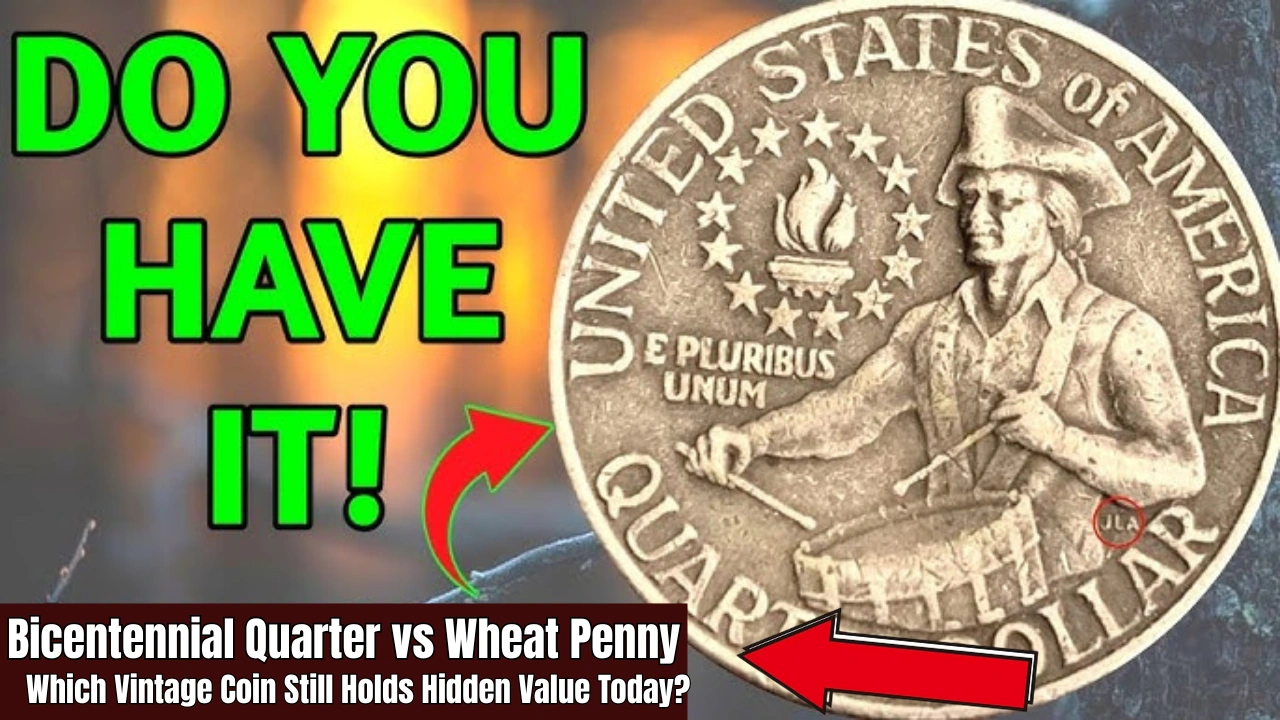
If you have ever stumbled upon an old coin in your change and wondered if it might be worth more than its face value, you are not alone. The Bicentennial Quarter vs Wheat Penny conversation continues to gain interest among collectors and everyday people alike. These two vintage coins are not just pieces of metal; they are pieces of history, and in some cases, they are hidden treasures waiting to be discovered.
In recent years, stories of rare coins showing up in loose change have gone viral, especially when it comes to the Bicentennial Quarter vs Wheat Penny. Both have unique qualities, historical significance, and the potential for surprising value. But which coin holds more promise today? This article breaks it all down, helping you understand the details, demand, and real-world worth of each.
Bicentennial Quarter vs Wheat Penny
When comparing the Bicentennial Quarter vs Wheat Penny, it is not just about age or design—it is about what makes a coin valuable in today’s collector market. The Bicentennial Quarter was minted in 1976 to honor 200 years of American independence, and its drummer boy design is easily recognizable. On the other hand, the Wheat Penny, produced from 1909 to 1958, holds decades of U.S. history and some surprisingly rare versions.
Collectors look at several key factors when deciding a coin’s value: condition, rarity, mint mark, and errors. While both coins are often still found in circulation, especially in coin jars or estate finds, one tends to carry higher hidden value depending on the variety. Below is a helpful overview of how these two coins stack up today.
Overview Table: Bicentennial Quarter vs Wheat Penny
| Feature | Details |
| Year Range | 1976 (Quarter), 1909–1958 (Penny) |
| Common Design | Drummer Boy (Quarter), Wheat Ears (Penny) |
| Mint Marks of Interest | S, D, No Mint |
| Circulated Value | 1 to 5 cents (Penny), 25 cents to a few dollars (Quarter) |
| Error Varieties | Double die, off-center, no mint mark |
| Collector Demand | High for both, stronger for Wheat Penny |
| Silver Editions | Only for Bicentennial Quarter |
| Rare Dates | 1909-S VDB, 1914-D, 1931-S (Penny) |
| Historical Appeal | National celebration vs early 20th-century coin |
| Surprise Finds in 2025 | Both appear in change and collections |
Why the 1976 Bicentennial Quarter Still Attracts Attention
The Bicentennial Quarter remains one of the most recognizable commemorative coins in the United States. Released in 1976, it featured a special reverse design of a colonial drummer to celebrate America’s 200th birthday. It was not a one-year issue; production started in 1975 and continued into 1976, all marked with the dual date “1776–1976.”
While most Bicentennial Quarters still in circulation are only worth face value, there are exceptions. Quarters struck in 40% silver, mostly found in collector sets, or those with mint errors like double strikes, missing elements, or off-center designs, can bring in much higher prices. Some rare silver versions have sold for hundreds of dollars, especially when in uncirculated or proof condition. The key is knowing what to look for.
Why Wheat Pennies Continue to Be a Collector Favorite
Wheat Pennies are beloved among collectors for many reasons. These one-cent coins were minted between 1909 and 1958, and their reverse design of two wheat ears flanking the words “One Cent” gives them their name. While they were common in circulation for decades, they have become harder to find in recent years.
What makes Wheat Pennies so special is the wide range of rarities within the series. Some specific years and mint marks—such as the 1909-S VDB, 1914-D, and the 1955 Doubled Die—are worth a lot due to their low mintage or production errors. Even common Wheat Pennies often sell for more than their face value, especially if they are in good condition. As the number of these coins still in circulation decreases, their value continues to rise.
Key Traits Collectors Look For in Both Coins
For both the Bicentennial Quarter and Wheat Penny, collectors search for specific traits that can boost a coin’s value far beyond its original worth. These include:
- Mint Errors: Double dies, off-center strikes, and clipped planchets are highly collectible.
- High-Grade Condition: Coins with minimal wear and strong detail are worth more.
- Low-Mintage Years: Fewer coins made equals higher demand.
- Unique Mint Marks: Identifying where a coin was made adds value, especially for key locations.
- Silver Composition: Bicentennial Quarters with 40% silver are more valuable.
- Proof Coins: Special strikes for collectors, often with a mirror-like finish.
- Uncirculated Coins: Mint-state coins that have not been in general use.
- Historical Significance: Tied to American heritage, both coins carry meaning.
- Demand Among Collectors: Strong interest drives prices up.
- Market Trends: Current popularity influences value.
1976 Bicentennial Quarter Found in Old Piggy Bank Becomes a Viral Treasure Story
Stories of everyday people finding valuable Bicentennial Quarters in piggy banks, junk drawers, or rolls of quarters continue to make headlines. Recently, a family uncovered a silver version while cashing in change, only to find out it was worth hundreds of dollars due to its mint condition and unique characteristics. These real-world finds keep collectors excited and hopeful, proving that valuable coins are still out there.
Why These Coins Still Show Up in 2025
Even though these coins were minted decades ago, they are still popping up in daily life. The reason? People stored them away for years without realizing their value. Coin jars, old family boxes, and estate sales often release these coins back into circulation. Additionally, machines like coin counters and ATMs unknowingly circulate them once again.
Because the Bicentennial Quarter was produced in such large quantities, it is not rare to find one today. However, finding a silver or error version is the real challenge. With Wheat Pennies, their age makes them less common in change, but they do show up thanks to years of being hoarded and passed down through generations.
The Nostalgic Appeal of Vintage Coin Finds
There is a special kind of excitement that comes with finding a vintage coin in your pocket. The Bicentennial Quarter vs Wheat Penny debate is more than just about value. It is about connection. The Quarter reminds people of the nation’s birthday and celebrations in the 1970s, while the Wheat Penny brings back memories of simpler times, classic coin designs, and a link to early 20th-century America.
These coins carry stories—where they have been, who has held them, and what history they have witnessed. For many, collecting is not just about money; it is about preserving something real and meaningful.
1976 Bicentennial Quarter Showing Up in ATM Change Sparks Surprising Online Curiosity
In a recent viral post, a user shared a photo of a Bicentennial Quarter they received from an ATM. The coin’s crisp condition and shiny surface led others to wonder if they had just found a rare piece. Online forums filled with discussions on how to tell if the coin was silver, a mint error, or part of a collector set. This kind of buzz proves how one small find can spark major curiosity, especially in today’s digital world.
Value Comparison Table: Bicentennial Quarter vs Wheat Penny
| Coin Type | Value Range (Common to Rare) |
| 1976 Bicentennial Quarter | $0.25 to $750+ depending on type |
| Wheat Penny | $0.03 to several thousand based on rarity |
FAQs
What makes a Bicentennial Quarter valuable?
Silver content, mint errors, and uncirculated condition can make Bicentennial Quarters worth significantly more than face value.
How can I tell if my Wheat Penny is rare?
Check the year, mint mark, and any unusual features like doubling. Rare dates like 1909-S VDB or 1955 Doubled Die are especially valuable.
Where can I sell my vintage coins?
Local coin shops, online auction platforms, and certified dealers are all good places to sell rare coins after proper evaluation.
Is it still possible to find these coins in change?
Yes, both coins still appear in circulation, especially from coin jars, estates, or loose change machines.
Are proof Bicentennial Quarters worth more?
Yes, proof versions made for collectors can be worth much more, especially if they are silver or in pristine condition.

