
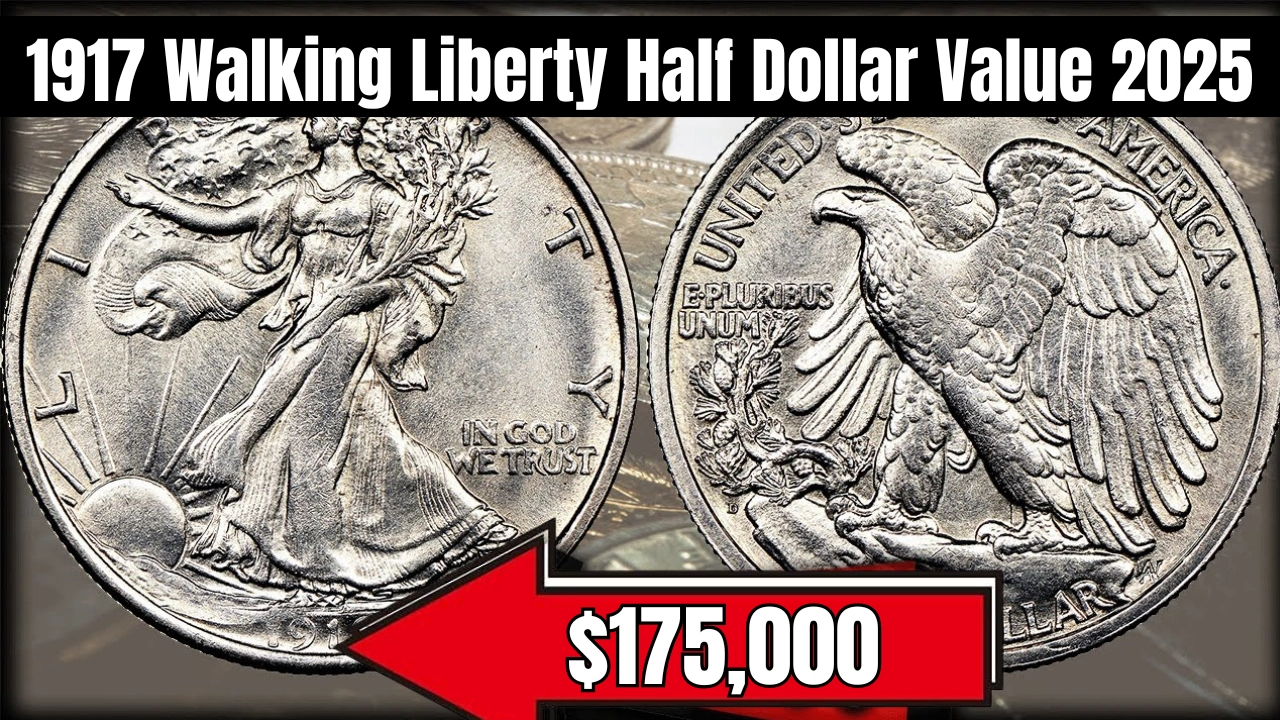
If you have come across a 1917 Walking Liberty Half Dollar, you might be holding more than just a piece of old silver. This iconic coin, known for its stunning design and historic roots, has become one of the most desirable early 20th-century U.S. coins among collectors. With values soaring in recent years, especially for well-preserved examples, it is time to take a closer look at what makes this coin so special.
In 2025, the 1917 Walking Liberty Half Dollar value is gaining serious attention. High-grade coins, especially those with rare mintmark varieties or Full Head strikes, are pulling in prices as high as $175,000. Whether you are holding one or looking to buy, understanding its details and market trends can make a big difference.
1917 Walking Liberty Half Dollar Value: What Makes This Coin So Valuable?
The 1917 Walking Liberty Half Dollar value is influenced by a mix of historical context, rarity, mintmark placement, and overall condition. Collectors look for obverse versus reverse mintmarks, Full Head designations, and coins with original luster. This coin was minted in Philadelphia, Denver, and San Francisco, with variations that dramatically affect pricing. The obverse mintmark coins, especially the 1917-D and 1917-S, are among the most sought-after. Because most of these coins were circulated heavily, finding one in mint-state condition is rare. This scarcity, combined with strong market demand, keeps pushing values upward, making the 1917 Walking Liberty Half Dollar one of the most exciting coins in today’s collector space.
Overview Table
| Key Detail | Information |
| Year Issued | 1917 |
| Mint Locations | Philadelphia, Denver, San Francisco |
| Obverse vs Reverse Mintmarks | Both types exist, with obverse more valuable |
| Top Auction Sale | Up to $175,000 for MS67+ Full Head examples |
| Common Condition Found | Circulated with moderate to heavy wear |
| Scarce Condition | MS65 and above, especially with Full Head |
| Most Valuable Variety | 1917-D Obverse and 1917-S Obverse in Mint State |
| Design Appeal | Artistic Liberty and eagle design |
| Collector Demand | Increasing steadily, especially among registry collectors |
| 2025 Market Trend | High-grade coins show consistent appreciation |
Early Circulation and Initial Scarcity
When the 1917 Walking Liberty Half Dollar first hit circulation, it was immediately used in commerce. Unlike today, few people saved coins in uncirculated condition. Because of this, most of the coins we see today are worn, showing years of use. Very few were stored away in mint condition, which has created a long-term scarcity of high-grade examples.
This heavy circulation early on is why finding a clean, sharp-looking 1917 coin is such a big deal. Mint State coins with original surfaces, strong strike details, and minimal wear are now highly sought after. Collectors are particularly interested in pieces that retain luster or have the Full Head designation, as those details add both beauty and value.
Mint Marks and Varieties That Influence Value
The 1917 Walking Liberty Half Dollar was minted in three locations: Philadelphia (no mintmark), Denver (D), and San Francisco (S). What really sets this coin apart is that some of the mintmarks were placed on the front (obverse) and others on the back (reverse), depending on when and where they were made. This change within a single year created multiple collectible varieties.
Obverse mintmark coins, like the 1917-D Obverse and 1917-S Obverse, are scarcer and more valuable than their reverse-mark counterparts. These coins, especially in uncirculated condition, bring higher prices at auction. Collectors also keep an eye out for coins with Full Head details, where Liberty’s head is sharply struck and fully defined. These coins often come with higher premiums.
How Condition Drives Pricing
Condition is everything when it comes to coin collecting, and the 1917 Walking Liberty Half Dollar is no exception. Most of these coins available today are in lower grades, meaning they have significant wear from circulation. While even circulated examples can have collector value, it is the Mint State coins that command the biggest prices.
Coins graded MS65 to MS68 are particularly desirable. If a coin also has the Full Head strike, meaning the details in Liberty’s cap are fully visible, that can increase value even further. Small differences in luster, eye appeal, or strike sharpness can shift the price by hundreds or even thousands of dollars. Certified coins with these features consistently do well at auction.
Auction Trends and Collector Interest
Over the past few years, auction houses have reported increasing demand for the 1917 Walking Liberty Half Dollar. Collectors are looking for top-tier examples, especially those certified by grading services like PCGS or NGC. Online marketplaces and coin shows have helped bring more visibility to this classic coin, attracting both new and experienced collectors.
What is also happening is that many high-quality examples are being held onto by private collectors. This reduces the supply of coins in the open market and contributes to rising prices. Some of the top auction prices in recent years include over $150,000 for coins with MS67+ and Full Head designations. The interest does not seem to be slowing down any time soon.
Market Segments Showing Highest Appreciation
While all varieties of the 1917 Walking Liberty Half Dollar have seen value increases, some segments have performed especially well. Coins with the following characteristics tend to appreciate the fastest:
- Obverse mintmark varieties, especially 1917-D and 1917-S
- Coins graded MS66 and higher
- Full Head designation from professional grading companies
- Prooflike surfaces or exceptional luster
- Low-population coins in registry sets
These coins attract more competition at auctions, as they combine rarity, beauty, and certification. Collectors building registry sets often drive up prices for coins with the best grades and eye appeal. This competition has helped boost overall market strength for the series.
Current Market Trends and Future Outlook
The 2025 market for the 1917 Walking Liberty Half Dollar is strong, especially among serious collectors. With more buyers entering the coin market and more attention on silver coinage, this coin stands out for both its design and investment potential. Demand remains highest for certified Mint State coins, particularly those with the Full Head detail and exceptional eye appeal.
Low survival rates in higher grades, combined with the coin’s artistic value and mintmark variations, make it a favorite in both personal collections and investment portfolios. As long as supply remains limited and demand stays high, the 1917 Walking Liberty Half Dollar value will likely continue climbing in the years ahead.
FAQs
What is the most valuable 1917 Walking Liberty Half Dollar?
The most valuable varieties are the 1917-D and 1917-S with obverse mintmarks in MS67 or higher, especially with Full Head detail. Some have sold for over $175,000.
How can I tell if my coin has an obverse mintmark?
Look for the mintmark just below “In God We Trust” on the front (obverse) of the coin. Reverse mintmarks are located under the eagle on the back.
Is it worth getting my 1917 Half Dollar graded?
Yes, especially if it is in good condition. Grading adds value and makes your coin more attractive to serious buyers and auction houses.
Are circulated 1917 Walking Liberty Half Dollars still valuable?
They can be. While heavily worn coins are less valuable, certain mintmark varieties can still fetch solid prices even in lower grades.
What should I look for when buying a 1917 Half Dollar?
Focus on mintmark placement, condition, strike quality (Full Head if possible), and certification. Coins with luster and clean surfaces hold the most value.

