
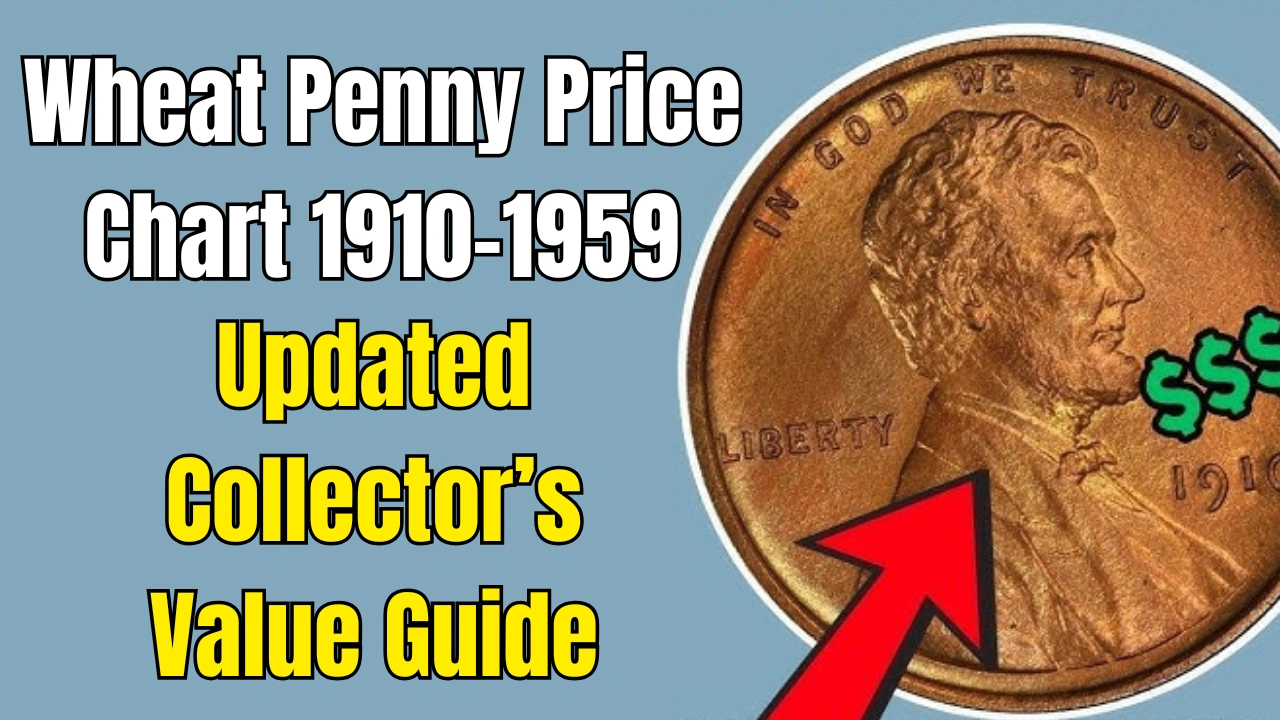
If you are into coin collecting or just stumbled across an old penny and are wondering what it might be worth, a good place to start is with a Wheat Penny Price Chart. These Lincoln cents, produced from 1910 to 1959, carry not just historical value but also the potential for real money, depending on the date, mint mark, and condition.
In this guide, we will dive into everything you need to know about identifying and valuing these iconic coins. Whether you are searching through an old coin jar or looking to invest in collectible coins, this Wheat Penny Price Chart will help you understand which pennies are common, which are rare, and which could be worth hundreds or even thousands of dollars.
Wheat Penny Price Chart: Why It Matters for Collectors
The Wheat Penny Price Chart is far more than a simple list of coin values. It serves as a crucial tool that helps collectors understand the factors that influence a penny’s true worth. Beyond just the year and mint mark, collectors analyze mintage numbers, striking quality, surface condition, and the presence of any errors such as doubling or repunched mint marks. A coin that seems average to the untrained eye might actually be a low-mintage issue or contain a rare die variety that significantly increases its value. By learning how to interpret the chart and cross-reference key details, collectors can avoid overlooking valuable coins. Whether you are just starting or expanding a serious collection, this chart provides essential insights to guide smart decisions.
Overview Table
| Key Focus Area | Description |
| Rare Early Dates | 1914-D, 1911-S, 1912-S are top early key dates |
| Famous Errors | 1955 Doubled Die and 1943 Bronze are highly sought after |
| Mint Marks | San Francisco (S) and Denver (D) often indicate rarity |
| High-Grade Value | Coins in mint-state condition command the highest prices |
| Popular Decades | 1910s and 1940s contain many collector favorites |
| Transitional Errors | 1944 Steel and 1959 transitional coins have strong value |
| Collector Demand | Prices driven by certified coins and known varieties |
| Modern Market | 2025 market trends show growing online interest |
| Preservation Tips | Original surfaces and uncleaned coins retain the best value |
| Certification Importance | Third-party grading boosts trust and price |
1910–1919 Wheat Penny Highlights
The early Lincoln Wheat cents from 1910 through 1919 are packed with value potential. Key among them is the 1914-D, a coin known for being heavily counterfeited due to its rarity and high market demand. Other valuable coins from this decade include the 1911-S and 1912-S, both of which were minted in small numbers and are hard to find in top condition. The 1917 Doubled Die Obverse is another favorite, especially among error collectors.
These early coins have seen strong price growth in recent years, particularly in certified mint-state condition. Original luster, sharp details, and lack of wear are all critical in determining their worth. If you come across any Wheat pennies from this era, it is worth checking them against the Wheat Penny Price Chart before spending or selling.
1920–1929 Wheat Penny Value Markers
The 1920s introduced some of the most interesting and deceptive coins in the Wheat penny series. The most iconic is the 1922 No D, a coin that lacks a mint mark due to a die polishing error at the Denver Mint. This makes it highly collectible and valuable when verified. Other notable coins include the 1924-D and the 1926-S, both known for their lower survival rates in high grade.
While most pennies from the 1920s are still affordable in circulated condition, the value rises quickly for coins with minimal wear, strong strikes, and clear mint marks. The Wheat Penny Price Chart shows a steady rise in demand for these harder-to-find cents, especially as more collectors try to complete full year and mint mark sets.
1930–1939 Wheat Penny Standouts
This decade produced a mix of high and low mintage coins, along with a few memorable errors. The standout here is the 1931-S, a coin with one of the lowest mintages in the series. It has always been a collector favorite and continues to hold strong value today. Another big name is the 1936 Doubled Die Obverse, known for its dramatic doubling and visual appeal.
The 1939-S is often overlooked, but collectors have started noticing its scarcity in mint-state condition. As with most valuable Wheat pennies, preservation is everything. A clean coin with strong detail and no cleaning marks is what buyers are after.
1940–1949 Wheat Penny Premium Varieties
The World War II years brought some major changes to coin production. In 1943, the U.S. Mint used steel instead of copper to save resources. But a few bronze coins were accidentally struck that year, and those 1943 Bronze cents are now some of the rarest and most expensive coins in the Wheat penny series. On the flip side, 1944 saw a few leftover steel planchets used again, creating another major error coin.
Collectors are always on the hunt for these transitional errors, as well as mint mark varieties like the 1946-S RPM. Coins from this era remain popular, and auctions regularly see strong prices for verified error coins.
1950–1959 Late-Series Rarities
Just because these are the final years of the Wheat cent does not mean they are all common. The 1955 Doubled Die Obverse is one of the most famous U.S. coin errors ever made, instantly recognizable due to the bold doubling of the date and lettering. The 1958 Doubled Die is even rarer, with only a few known to exist, making it a holy grail for collectors.
Coins from 1955-S and 1956-D are also popular for those searching uncirculated rolls for hidden gems. Even 1959 transitional errors attract attention, as they represent the shift from the Wheat reverse to the Memorial design. As always, checking these coins against the Wheat Penny Price Chart can reveal surprises.
Key Value Drivers in Wheat Pennies
Several core factors drive the value of Wheat pennies. Low mintage numbers are a strong starting point. If only a few million were made, and even fewer survive in high grade, value rises quickly. Next comes condition. A coin in mint-state condition can be worth 10 to 50 times more than a worn version. Error coins, especially dramatic doubled dies or wrong-planchet pieces, attract competitive bidding.
Mint marks also matter. San Francisco and Denver coins tend to be more limited than Philadelphia issues. Finally, certification plays a big role. A coin graded by PCGS or NGC gets more trust from buyers and usually sells for more.
Wheat Penny Market Trends 2025 and Beyond
The collector market for Wheat pennies is stronger than ever in 2025. Online auctions, collector forums, and social media have brought more eyes to the hobby. Coins that were once ignored are now being reevaluated and submitted for grading. The demand for slabbed high-grade coins is rising, especially for early key dates and famous errors.
Doubled die varieties are particularly hot right now, as more people are learning how to identify them. With prices steadily increasing, many collectors see Wheat pennies as both a fun hobby and a smart long-term investment. The Wheat Penny Price Chart continues to be a reliable guide as trends shift and new finds come to light.
FAQs
What is the most valuable Wheat penny?
The 1943 Bronze and the 1958 Doubled Die Obverse are among the most valuable, with some selling for over $100,000.
How can I tell if I have a rare Wheat penny?
Check the date, mint mark, and look for any errors like doubling. Then compare it with a trusted Wheat Penny Price Chart.
Are all steel pennies valuable?
No, only certain steel pennies like the 1944 Steel have high value. The 1943 Steel cents are more common.
Should I clean my old pennies?
Never clean coins. It damages the surface and lowers their value.
Where can I sell valuable Wheat pennies?
You can sell them at coin shops, auctions, or online marketplaces. Certified coins tend to bring the best prices.

