
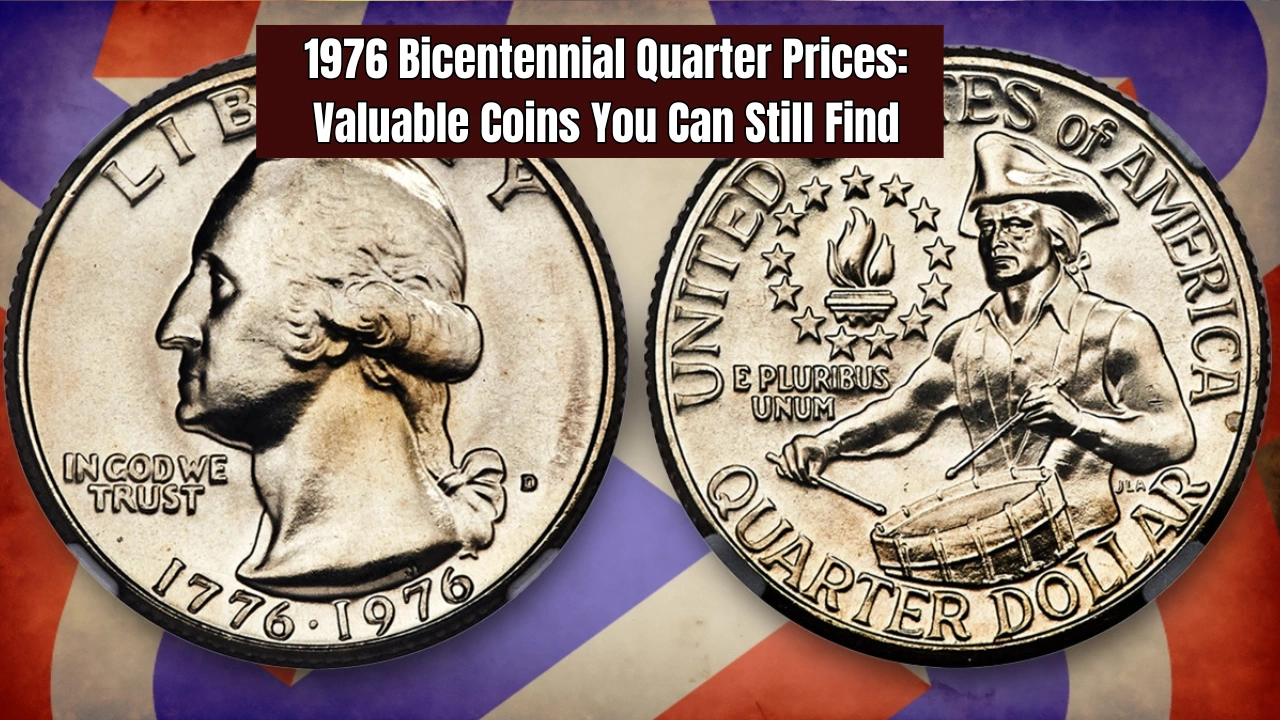
If you are the kind of person who likes checking your spare change, you might want to take a second look at any 1976 quarters you come across. That simple coin with the colonial drummer on the back could be worth more than you think. Yes, we are talking about 1976 Bicentennial Quarter Prices, which have become a hot topic among collectors and coin enthusiasts alike. These quarters may look common, but certain ones carry surprising value.
Despite being minted in the millions, only some Bicentennial Quarters are truly valuable. If you understand what to look for, you could be holding onto a rare piece of history without even realizing it. In this guide, we will break down everything you need to know about 1976 Bicentennial Quarter Prices. From rare silver versions and unique mint marks to errors that make collectors go crazy, you will learn how to spot valuable coins and possibly cash in on one.
1976 Bicentennial Quarter Prices: What Makes These Coins Special
The reason these quarters continue to gain attention is not just their historical design but their variations in minting, composition, and condition. Many people do not realize that some of these coins were struck in 40 percent silver, while others were regular clad coins made for circulation. Also, special mint sets and proof versions were produced with higher detail and finish. Collectors are especially interested in coins that are still in uncirculated condition, proof strikes with mirror-like surfaces, or those with minting errors like double dies and off-center strikes. If you can recognize these features, you might be holding a coin worth far more than twenty-five cents.
Overview Table of 1976 Bicentennial Quarter Types
| Coin Type or Feature | Estimated Value Range |
| Circulated Quarter – Philadelphia Mint | $0.25 to $2 |
| Circulated Quarter – Denver Mint | $0.25 to $3 |
| Uncirculated Quarter – Philadelphia Mint | $1 to $10 |
| Uncirculated Quarter – Denver Mint | $2 to $15 |
| Clad Proof Quarter – San Francisco Mint | $1 to $5 |
| Silver Proof Quarter – San Francisco Mint | $5 to $20 |
| 40 Percent Silver Uncirculated (Mint Set) | $5 to $30 |
| Error Quarter – Double Die or Off-Center | $50 to $1,500+ |
| Deep Cameo Silver Proof – High Grade | $20 to $50+ |
| Rare Error Quarter – Unique Mistakes | Up to $3,000 |
The Story Behind the Bicentennial Quarter
The Bicentennial Quarter was introduced as part of a national celebration of 200 years of American independence. Instead of releasing a separate commemorative coin, the United States Mint decided to redesign the reverse side of the regular quarter. The result was a colonial drummer boy design created by Jack L. Ahr, replacing the traditional eagle. On the front, George Washington remains, but with the dual date 1776–1976 to mark the occasion. The quarter was released into circulation starting in 1975, and no quarters with the year 1975 were ever minted. This bold move created a one-of-a-kind coin that still captures the interest of collectors today.
Types of Bicentennial Quarters
Not all Bicentennial Quarters are the same, and knowing the differences is key when it comes to 1976 Bicentennial Quarter Prices. The Mint released several types:
- Philadelphia Mint Circulation Strike: These quarters have no mint mark and were made for general circulation. They are quite common, though high-grade uncirculated ones are more valuable.
- Denver Mint Circulation Strike: These have a “D” mint mark and are also widely available. Uncirculated ones with clean detail and minimal wear can be worth more.
- San Francisco Proof Coins: These include two types. The first is a copper-nickel clad proof meant for collectors, with a shiny finish. The second is a silver proof made of 40 percent silver, which is more valuable.
- 40 Percent Silver Uncirculated Quarters: These were only sold in special three-coin sets and never released into general circulation. They are highly collectible.
Each type has its own price range depending on the condition and rarity, especially when found in untouched or high-grade condition.
How to Identify Valuable Bicentennial Quarters
If you are trying to figure out whether your 1976 quarter is worth more than face value, there are a few things to look out for:
- Mint Mark: Found on the front of the coin to the right of Washington’s hair ribbon. “S” marks are for San Francisco, “D” for Denver, and none for Philadelphia.
- Silver Content: Silver coins are heavier and have a different color tone, with no copper stripe along the edge.
- Condition: Coins in excellent shape, especially those graded MS65 or higher, can fetch more. Proof coins with deep cameo finishes are particularly valuable.
- Mint Errors: These include coins with doubling, missing layers, or off-center designs. Some error coins have sold for thousands.
Collectors pay close attention to these traits because they determine a coin’s scarcity and appeal in the marketplace.
Value Ranges for Bicentennial Quarters
Understanding 1976 Bicentennial Quarter Prices also means knowing what collectors are willing to pay today. Here is a general idea:
- A standard Philadelphia or Denver quarter that has been circulated is generally worth just its face value, but uncirculated examples can sell for a few dollars.
- San Francisco clad proofs range from $1 to $5 depending on condition, while silver proof versions go from $5 to $20 or more.
- Uncirculated silver coins that were part of special sets usually go for $10 to $30.
- Rare error coins, especially those with strong doubling or off-center strikes, have sold for over $1,000 in online auctions.
These prices are influenced by condition, rarity, and market demand, which can change over time.
Common Valuable Errors in Bicentennial Quarters
Error coins are some of the most exciting finds for collectors, and they can boost 1976 Bicentennial Quarter Prices dramatically. Some examples to look for include:
- Double Die Errors: These show doubling in the text or numbers, particularly in “IN GOD WE TRUST” or the dates.
- Off-Center Strikes: Coins that were not aligned correctly during minting may have part of the design missing.
- Missing Clad Layers: These coins will have a copper look or exposed core, making them instantly stand out.
- Wrong Planchet Errors: Sometimes, coins are struck on the wrong metal blank, such as a penny or foreign coin base.
If you find a coin with one of these issues, it is worth getting it checked by a professional grading service.
Finding Bicentennial Quarters Today
Believe it or not, valuable Bicentennial Quarters are still out there. You might find them in your pocket change, in rolls of coins from the bank, or even in old family coin jars. Estate sales, garage sales, and antique stores also sometimes reveal hidden gems. For more serious collectors, coin shops and shows are great places to find higher-grade or rare versions.
If you come across a Bicentennial Quarter that looks different or is in excellent shape, it might be worth getting it professionally graded. A small investment in grading can lead to a big return if the coin is rare or valuable.
Should You Save Bicentennial Quarters?
Yes, especially if you find a silver version, a proof, or one with an error. These coins are part of a significant moment in American history, and their popularity has never faded. Even common ones are worth keeping as a collectible, but those in excellent condition or with unique traits can turn into real treasures.
FAQs
Are Bicentennial Quarters still in circulation?
Yes, they are still found in circulation, although most are worn and only worth face value.
How can I tell if my quarter is silver?
Check for an “S” mint mark and look at the edge. Silver quarters will not have a copper-colored stripe and will feel slightly heavier.
Are all 1976 quarters valuable?
No, most are common, but silver, proof, and error coins can be worth much more than face value.
Where is the mint mark on a Bicentennial Quarter?
It is located on the front of the coin, just to the right of George Washington’s ribbon.
Is it worth grading a Bicentennial Quarter?
Yes, if it is in near-perfect condition or has a noticeable error. A professional grading can significantly increase the coin’s market value.

